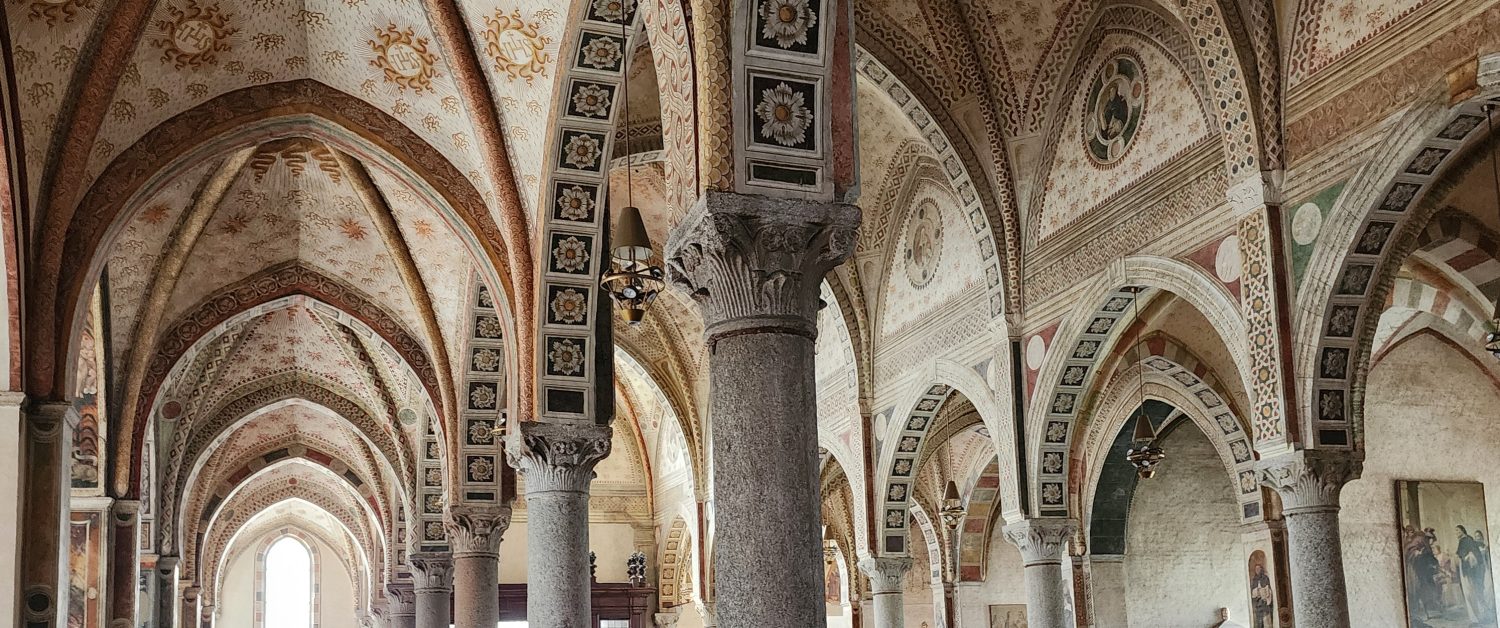
I’m riding a tour bus through the streets of Naples. If you’ve never been to Naples, put it on your list. I’m riding the bus with—that’s a good question. Who am I riding the bus with? I don’t have a term for this type of relationship. We’ll call her Rosa. Once, we were married to brothers, so you might say she is my sister-in-law. But the brothers are dead, and the one that was once my husband has been dead for so long that I now have another husband, so who am I riding the bus with? I could say she’s my friend, which would be somewhat true, but also somewhat false. You choose your friends, but Rosa and I didn’t choose each other. We are family, but I no longer have a name for how. We did choose to take this trip to Naples together, though, and to get on this bus.
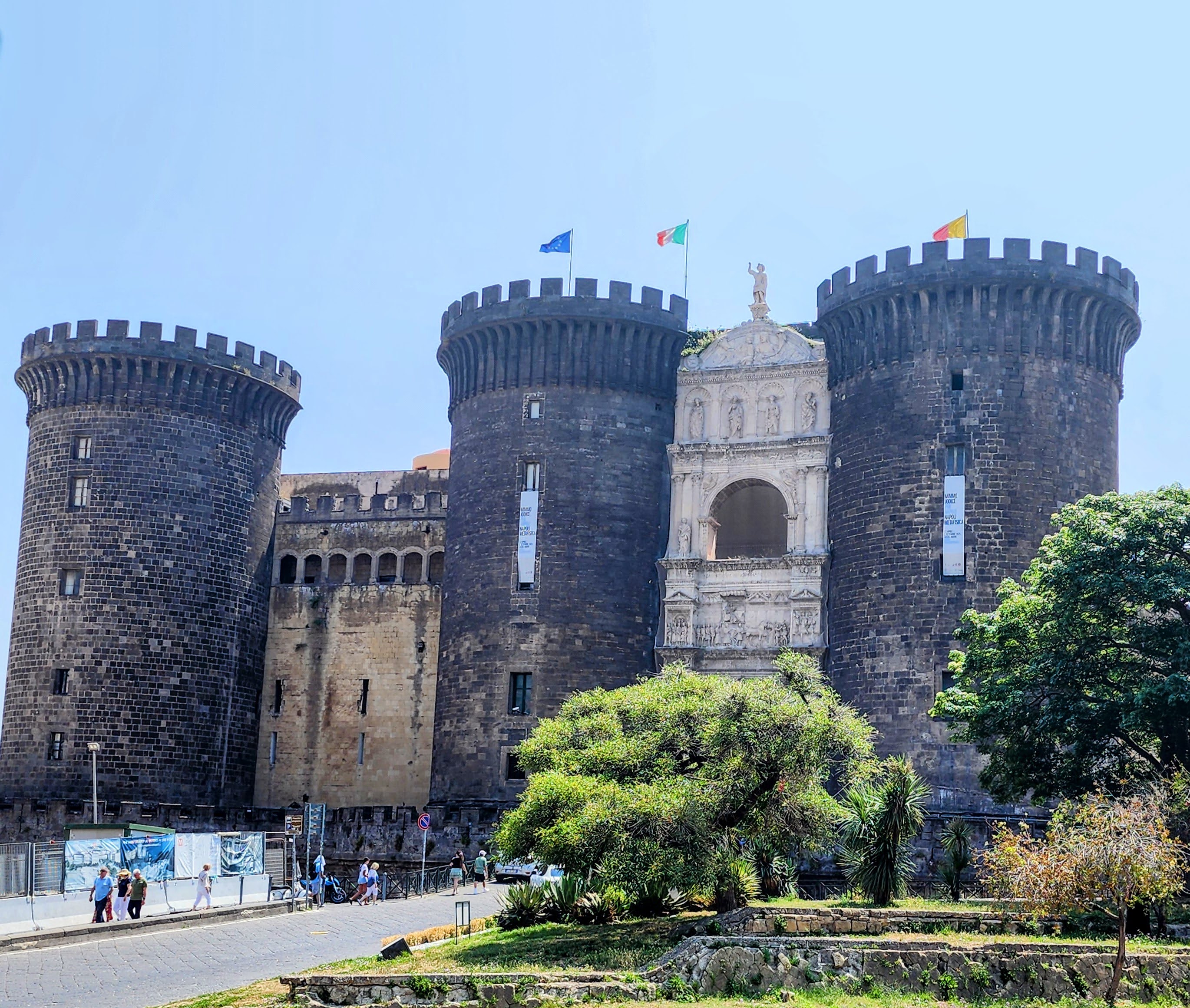
The port, the castles, the zillion churches, and beeping herds of motor scooters are zooming by us on all sides and I think, “What a shame Pio didn’t get to bring me to Naples. He would have loved that.” Then a little giggle bubbles up inside me as I realize OF COURSE Pio brought me to Naples. Why else would I be on this bus with Rosa, listening to the Italian guide channel, humming along to the songs? How else could this have happened? And I feel quite delighted.
It’s cheaper when only one of you has to buy a plane ticket, a bus ticket, and pizza. It’s easier when only one of you has to figure out how to be gone from work. One of us is more of a particle (that would be me) and one of us is more of a wave, now. One of us is denser and the other lighter.
It’s easier, in ancient cities, to feel less bound to things like time. It’s easier, after you live through a death, to feel less bound to things like density. I love to consider the fact that everything is mostly made up of nothing, anyway. That atoms are mostly “empty” space, so that what “is” and what “isn’t” are more the same than different. When I say I “love to consider” that, I mean it literally. I love to sit with it and try to feel it, try to imagine it. Tangible, imaginary, present, past, future…are all made up almost entirely of the same material. The difference is negligible.
All of that is very lovely. But in the evening Rosa turns the tv on and all of the sudden the world is full of war and inconceivable suffering. Which doesn’t feel at all like the peaceful nothing of empty space where time is a big pond you can swim in. How can all of this be possible, simultaneous?
I don’t know. One minute I’m on a tour bus humming along to “O Sole Mio” and the next minute I am aware of the apocalypse that is also happening.
We had a fantastic view of Vesuvius from the second story of the bus. How in the name of common sense can so many people be living so close to this enormous volcano? All of us know what volcanoes are capable of and all of us know that Vesuvius is not to be trusted. Even though lava and crumbling buildings are mostly made of nothing, I wouldn’t like to be beneath either one of them.
Ironies are everywhere.
On the subject of war and exploding volcanos, I don’t think it’s actual death that I am afraid of. I’m already mostly made of nothing. I’m afraid of suffering. Of pain. That small percentage of particle that is physical and can feel sensations changes everything. At all cost, I don’t want it to be cut, burned, crushed.
Let’s not talk about that anymore. Let’s get back on the bus. Let’s not look at Vesuvius. Let’s admire the Castello dell’Ovo. How it sits between the land and the sea for 2000 years. Let’s think about how 8 years can go by after your husband dies and how both of your spirits go through a transition. And then both of you are ok. Different, but quite alright. And the castle is full of tourists, not knights in armor, and the ocean still laps at its feet.
Rosa and I get off the bus and are walking back to the hotel, trying not to get run over by motor scooters. Her husband has only been dead for 4 years and she still fights it. The suffering makes her denser, it seems to me, and further from the lightness that is everything. Our lives have been so different that we are an inconceivable pair.
I’d like to sit at a table by the street after getting off the bus and have a cold drink—a Spritz, to be exact. I would ponder the castle and pray to Vesuvius to be nice. But Rosa wants to go to the hotel room to lie down. I wouldn’t mind sitting at a table “alone,” but I decide to go with her. The dead brothers would appreciate that. I can have a Spritz another day. Besides, I have writing to do.

 Talking to Myself