Release date: September 17, 2018
Title: Marry a Mennonite Boy and Make Pie
Front Cover:
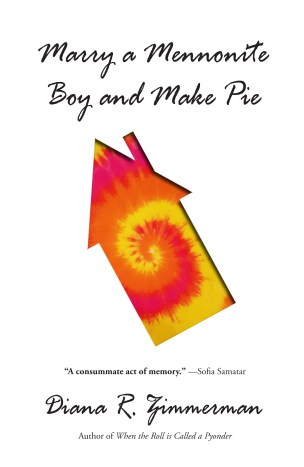
Back Cover:

How you will get yours: Amazon.com
Release date: September 17, 2018
Title: Marry a Mennonite Boy and Make Pie
Front Cover:
Back Cover:
How you will get yours: Amazon.com
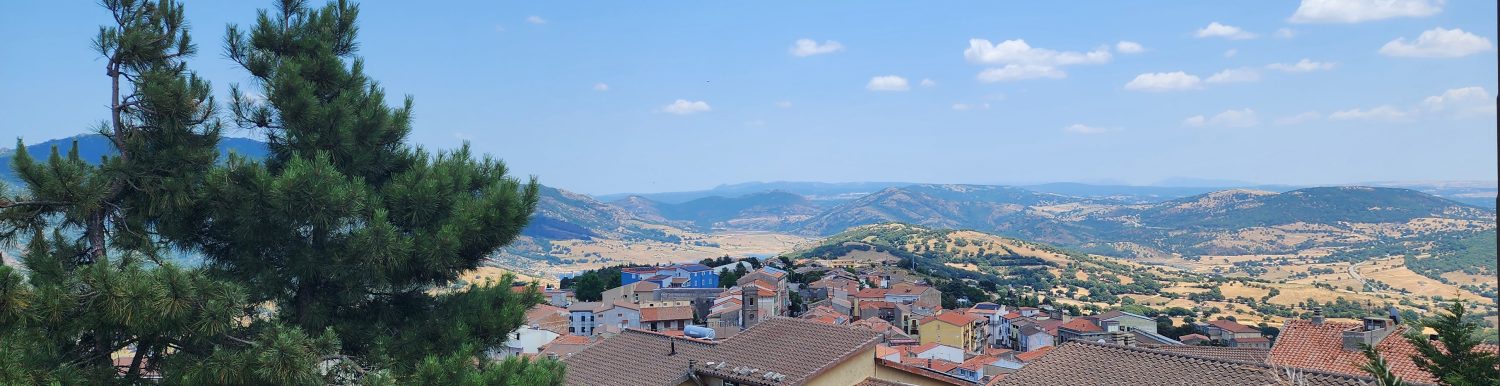
i nonni stanno piantando
i fagiolini li
nei loro giardini al Parco
dei Fontanili
i pesci sono tornati
a nuotare nel fiumetto
sotto il ponte
la lavanda comincia a
fare i fiori violi, profumando
l’aria, chiamando gli appi
ma tu dove sei
eri qui, ne sono sicura
avevamo camminato qua
insieme a la mano
guardando i piccoli fiori del castagno
rubando le more di gelso
I haven’t actually been straight with you yet about Marry a Mennonite Boy and Make Pie. As usual, I don’t throw all my cards on the table at once.
So, the story is that the book isn’t only about somewhat-silly/somewhat-naughty Mennonite girls learning about the joys of cheap wine and no curfew. The book is also about what happened to me the first time I came to Costa Rica—how I fell so completely in love with something I was supposed to find curious and interesting. How I fell in love with someone I was supposed to walk away from and forget.
Yeah. I don’t talk about it much. But the book is coming in mid-September, so I’m about to.
Throughout the book, interspersed with the vignettes about that unforgettable summer in that precious and miserable apartment, are snapshots of moments in Costa Rica. I named the town they took place in “Los Rios.” The scenes from Los Rios are placed there to show you what I saw, play the sounds for you, create a moment of the feeling of complete immersion in a different world. The Los Rios segments are spoken in a different voice than the rest of the story. They might almost be considered prose poems, and are told from a more distant, omniscient point of view than the main story of girls in the summer figuring out to survive.
Today I am sharing the first Los Rios scene with you. It’s a picture of a kitchen unlike any kitchen I had ever imagined on any day of my life previous to the day I walked into it. My intent is to convey a sense of stunned admiration and wonder at its essential simplicity, and therefore, its beauty.
On the kitchen in the house in Los Rios, from Marry a Mennonite Boy and Make Pie…
There is no refrigerator in the kitchen. Nothing here requires electricity except the bulb. The kitchen is not even a room in the house; it is a wooden addition with a brushed earth floor connected to the back of the house made of cinderblock. It is neat as a pin. It is virtually empty.
Beside the back door is a woodstove. Is that what I will call it? It does not have a name in my language. They call it the oven but it isn’t that either. On top of a roughhewn wooden base, two open-ended clay ovals are placed, and, inside of them, sticks smolder. There is no stovepipe. Thin white smoke escapes through the spaces that are purposefully left between the boards that form the walls, the space below the roof.
The kitchen sink is a sectioned cement tub. It is set through the wall so that the drain runs into the scorched yard where chickens dash around clucking. Cool water comes from a faucet with a round metal knob like the one outside the farmhouse where my mother hooked up the garden hose on dry August evenings. The sink is also the washer, where every morning Hilda who asks me to call her “Mamá” scrubs the clothes of the day before into spotless submission and drapes them over the barbed wire fence at the back of the yard to dry.
In the shallow section of the sink sets a clay pot, its opening covered by a lid. Inside the pot, the half shell of a round nut called a jiícaro floats on water. When we are thirsty, we reach into the pot, scoop water into the jiícaro and lift it to our lips, cool water running down our chins in the smoke-blackened kitchen. Curling mango leaves skitter and sun stripes slip across the floor.
In this kitchen, more than anywhere else, I am a foreigner. Here, I not only have no words, I am helpless. I do not know how to wash my own clothes. I cannot fry an egg. We do not have cereal or apples or bread. We have rice, beans, tortillas made of corn that my papá, called Tito, grinds. We have canned tuna, sometimes a tomato, a strange sweet custard made of purple corn, stewed chicken for a birthday. When Diego who says he is my brother goes fishing and brings home little bagre, mamá Hilda fries them in boiling vegetable lard, eyeballs and all, and we devour them down to the brains in their heads, driven by a need for nutrients for which we have no names.
Marry a Mennonite Boy and Make Pie will be available from Amazon.com on September 17, 2018.
I’m supposed to be shamelessly promoting my book that’s soon coming out, but this week it’s not going to happen.
Instead, it’s time for another letter from the road nobody wants to travel on. Nine months in. Yeah. You say, “Oh that’s so fast. How can it be 9 months? It seems like yesterday!” I say, “Lucky you.” It must be nice.
I don’t really like the word “Grief” because I don’t understand it. Just the word sounds like throwing up. It makes me picture someone crying so much they can’t move. Which, for me, is not one of my choices. It’s spoken of as if it were a sickness you come down with then get over, yet often referred to as a “journey.” Maybe it is like a sickness—I don’t know. I’ll let you know if I get over it. But it’s the only word we have for being really sad for a long time about something big, so I guess I’ll have to break down and use it.
This is what I want to tell you about Grief, in case you come down with it too, someday, or you have another, less-vocal, friend who gets bitten by the bug:
1. The “journey” metaphor does not work for me AT ALL. At least not so far.
I love all trips categorically–heck, I even like getting on the bus–but I do not like this one bit. Geez. If this reveals itself later to have been a journey, I’ll let you know, but for right now can we not refer to this as some type of trip or pilgrimage I have decided to take? Pretty please? It’s more like a case of malaria. If this is a journey, it is The Trail of Tears. It is a forced exodus from a war-torn country. It does not feel like being on a journey. It feels like being suspended in time.
2. You get used to things.
I’ve said this already, but here it is again. You get used to things you cannot imagine you could get used to. You just do. Walking in the door and talking to an empty house. Doing absolutely everything for yourself. Eating by yourself. Taking up the whole bed. You get used to the person who’s not there being not-there. You get used to trying to remember what it was like when they were.
You also get used to doing whatever the hell you feel like whenever you feel like with or without a good reason. It’s very selfish. It might be the only perk. You never have to share anything or explain yourself. You just leave when you want to go home, buy something because you feel like it, pour another glass of wine or skip it entirely. Nobody asks you anything. You can go to bed ridiculously early if you haven’t got anything better to do.
3. Being around the wrong people is worse than not being around the right person.
Make no mistake: People in the middle of Grief are not necessarily desperate for company. Or maybe that’s just me being a Scorpio. I wouldn’t know. I’m just saying: being alone is not the worst thing. Not just any human being is a suitable replacement for the one who’s gone. A person experiencing grief may not want to be alone. Or they may prefer it to any other option they can think of. Don’t take it personally. If you propose something and your grieving friend gives a weird answer that sounds a little like they might be putting you off, they probably are. Maybe this is because we get used to being selfish.
You might need way more down time than before. I can become thoroughly miserable if I give myself something to do every night of the week. It’s too much. I just need more space between things. And at 9 months, I am WAY better at this than at first! Oh man. Way better. At first, I needed a day of hibernation for every hour out of the house. Emotional overload is like dengue fever–it takes a long time to get your strength back and it doesn’t come all at once.
4. You don’t want people to pity you.
I will say that I make/have made a concerted effort not to seem pathetic. Sometimes I feel pathetic, but It’s not ok with me to show it. I save pathetic moments for when it’s just me and the cats. I don’t mind appearing to be sad, but I don’t want to inspire pity for any reason. That bothers me.
5. You never mind talking about it.
I’m checking back in on this subject. I remember writing before that it doesn’t bother me to talk about Pio. I expect it never will. I don’t mind talking about him when he was healthy or telling you about when was sick. It’s not like I forget about it when I’m talking about something else, right? And no, I’m not going to lose it on you. I don’t want you to pity me, remember?
6. Your life does not go on. It stops and starts over.
Lots of people, when they want to be encouraging, say things like, “Life goes on,” or talk about “Getting on with life.” This, in the literal sense is true. Life on the planet does indeed go on no matter what happens to any of us—there’s no arguing that. But YOUR life–when your husband dies or some such thing–your life as you know it? It’s as over has his is. And it would be nice if somebody would warn you about this, that way you will know you’re not going crazy when that’s the way you feel. It doesn’t mean you’re going to die now, too. It means that life is over and whatever happens next is going to be part of a different one. How you feel about that—whether you like it or not—is irrelevant. It just is. You’re welcome.
7. It’s very hard to reach out, so you hope other people will.
This is another one I’m better at now than I was at first, but I’m including it in the list because it belongs here. It takes more nerve to reach out to people than it did before, even for a extrovert like me. A person in my shoes is probably not going to call you, ask you how you are, and see if you want to go out to lunch. Because you have a life, and what if you’re busy? I don’t want you to have to tell me no. Or say you’ll call me back and then you don’t. I would rather eat my sandwich in peace and not set myself up for disappointment. I’m not going to ask, and then ask again.
When your friend is having a time of Grief, it’s your turn, and it might be for a long time. And if they make some lame-sounding excuse, it’s ok. Try again later. It might just not be the right day. Or the right week.
8. You get pretty good at the art of being happy and sad at the same time.
Maybe they’re opposites on the vocab test, but in real life, they’re not. In real life, they’re like red and blue: when you mix them, they make new color. That’s the color of your new life. Just because one day you’re happy doesn’t mean you’re “over it.” And because two days later you’re having a complete and unexpected meltdown doesn’t mean you weren’t really happy, then. Happy things can make you very sad. Sad things can be very comforting. It’s ok. Purple is like that.
That’s what I can tell you from here, 9 months after my life stopped and started over. And I have one last piece of advise for you when talking to your friend who has lost something immense:
Do not say “If you need anything let me know.” Have I mentioned this? Either offer something concrete, or say, “Have a nice day.” This invitation to “anything,” certainly stated with all benevolent intent, is SO ANNOYING. What exactly is it supposed to mean? It’s so open, it means nothing. Is it an offer of money? I don’t think so. You’ll drive me to the hospital if I get bitten by a snake? If I run out of milk or eggs you’ll be right over? I should call you instead of the fire department if my house catches on fire? I don’t get it.
Try again. You want to offer something? Offer it. Hey, do you need a ride to the grocery store? Wow, my lemon tree is loaded to the ground—want some? Want to have breakfast tomorrow morning? Need anything from the hardware store? Those offers I can manage. But that “ask me for anything” thing—it doesn’t work. At all. I will probably not ask you for anything, even when I need something. And you probably know that. I will probably just figure it out on my own. Which, unavoidably, is the New Normal.
there will be
scarlet macaws
to fly over
emerald jungle
there will be
night rain to
conduct the chorus of
a thousand trees
there will be
more ocean
in the world
than you or I have
dreamed of
dawn will be
gentle as a mother
when we
open our eyes
can enough rain fall
for these thin sticks
cut off, pushed
into the ground
to send out
their own roots
to stand alone
to dare green?
can the sky
hold the weight of
so much water?
can time
hold its breath
so long?
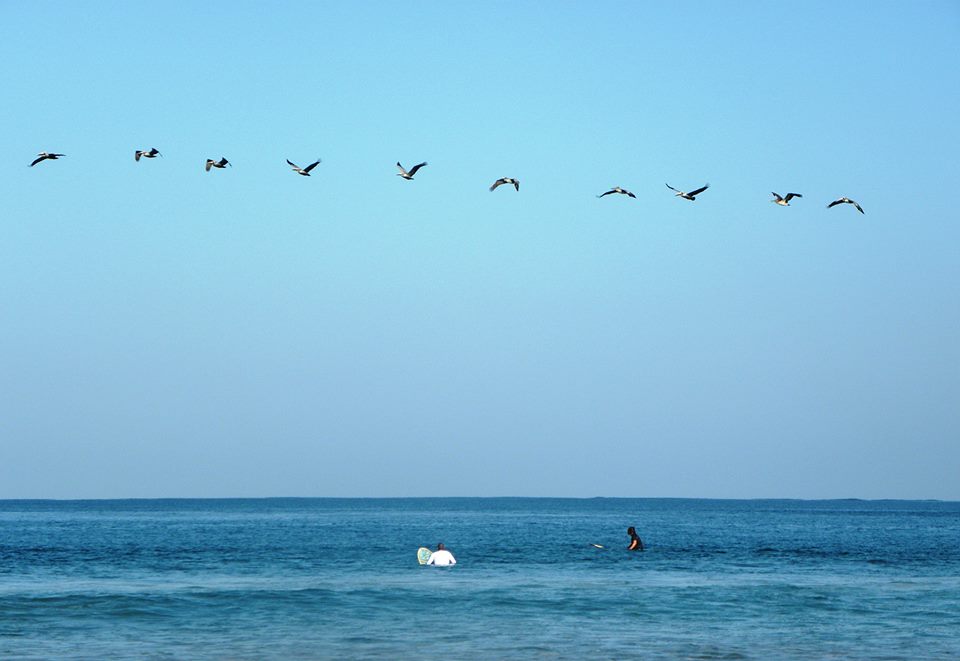
I go out surfing in the morning. The ocean is warm and crystal clear–so clear I can see the ripples in the sand two or three meters below my feet as I sit on my board. Waiting. All I do is wait. I wait and wait and wait. I had no idea you could wait so long and still have so much time left. To wait.
The sun climbs. Sets of waves come. When I’m surfing I’m thinking about surfing. That’s all. Watching the horizon for a movement or a slight change in color that means the next set it coming. No more, no less. Most of surfing is waiting. For waves. For the right wave. For the right moment to paddle and stand. At least when I’m surfing, I know what I’m waiting for. Maybe that’s why it’s so much of a relief. Sometimes I surf well, sometimes I don’t. Sooner or later I’m thinking about breakfast.
I ride back to the shore and lay on the sand. Above me in the blue are clouds. I think about water. So much water. In me, around me, above me. I think about Pio and how he filled up with water. I think about how ashes are what’s left of a person when all of the water is gone. I wish it would rain on me right now and the water would be him. The same molecules. I supposed it’s not impossible.
Everything aches. Sometimes a lot, sometimes a little.
Eight months have gone by. Compared to the whole rest of my life, it’s nothing. It’s already been an eternity. I wait and wait and wait. As if, if I wait long enough… What? He will come back? I don’t think so. He’ll send me some kind of sign? For what? I’ll die too? Well there’s hardly any debating that. But is that what I’m waiting for? I don’t know. I’m waiting to find out what I’m waiting for. It’s taking such a long time.
I look at pictures of us and we have the same eyes. We have the same hair. I look at us and now I see why some said we looked like siblings. At the hospital in the last days, Pio’s roommate thought he was my father.
Time is not obeying the rules. Or maybe I’m finally learning to understand it. It doesn’t just go, it stands still, thick as giant waves of salt water. A friend tells me I seem to be moving forward. I say I don’t know about that, but thanks. I say thanks because I can tell it was a compliment. I don’t want to move forward. I want to move backward and I can’t. I don’t want to do anything. So I wait. It doesn’t feel to me like I’m moving any direction. It’s the same day over and over and over. I wait for a different day, but every day when I wake up, it’s the same one. So I wait.
Waiting is hard work. When you don’t know how long you will have to do it. How hard it will rain, how much the wind will blow. When you don’t know what you are waiting for. But it’s the only thing that seems possible, so you do it.
I don’t know what “grief” means, how it’s different than just being sad. What it looks like. How you do it. I don’t know what “healing” means either, how it’s different than “feeling better.” I don’t want to feel better. Except when I’m surfing. It doesn’t go away, but you learn to live with it, another friend says. Wise words. I don’t want it to go away. I want to live with it. If my sadness goes away from me, there will be nothing left of me. I will be water vapor like Pio. Clouds and ashes.
I sleep deeply. On cool or rainy nights, the cats cry to be let under the mosquito net with me. We have the whole bed. I eat. Don’t worry about that. Then the morning comes and it’s the same day again. I don’t mean to say that I am bored or depressed. I don’t think I am either one. I’m drawing you a picture of time. Eight months. Is that a long time? I don’t know. It’s the same as 10 years. Is ten years a long time? Not really. Eight months is much longer. There’s no use asking how long I have to wait. Waiting is just waiting. Watching the horizon for a movement or a slight change in color.
MARRY A MENNONITE BOY AND MAKE PIE, as you know, is a true story—or more accurately, it is a true set of stories. It is, therefore, a memoir. It’s not a pure-bred memoir, though, because lots of fiction is stirred into the mix. You’re not supposed to do that in memoirs, but I did it anyway, and in this post I am going to tell you why.
The publisher calls MARRY A MENNONITE BOY AND MAKE PIE a “Fictional Memoir,” which is a description that I like. The book is more true than false, but it’s chock full of little lies. I imagine that puts it in the category of “hybrid genre,” which is a thing, and (as I learned) one that big publishing houses are not wild about. That’s ok. Keeps a girl humble.
Here are the 3 reasons that I combined fact with fiction in this book:
1. I fudge the truth to protect people’s privacy. Rather obvious, I imagine. This is why I changed most names except mine and the cat’s, and changed details of people’s families and such like. People who never asked to be written about are going to find themselves on these pages, and I feel like the least I can do is not throw everybody COMPLETELY under the bus. Right?
2. I’ve made things up to fill in the blanks. This is the reason for most of the fiction mixed in with literal memories in MARRY A MENNONITE BOY AND MAKE PIE. Keep in mind that the writing of this book took place over a 20-year period from 1996 through 2017, and during that time I may have sacrificed a few brain cells. There are so many things I don’t remember or never knew. You can’t, for example, write a book about 4 college students living together if you don’t remember one of your roommate’s majors. So, you make it up. And then you have to make up more things in order to make it believable. You end up with quite a web of fabrications. And? The story is still true. Another example is that I don’t remember where Dan went that summer, so I made up some adventures for him. Who cares? The point isn’t what happened while he was gone. The point is what happened to Nina when he came back. I don’t remember where the heck Sheila’s Grandma Friesen lived, so I put her in the retirement community. Sorry, Grandma. I don’t remember what Mean Tabitha really said that upset me so much the night Beth invited her over to dinner, but I remember how I felt about myself and how I felt about her. Etc, etc.
3. I use fiction to develop characters and situations. A conversation with Beth might be mostly or partly fictional because the point of the story is what we talked about and the conclusions we drew, not which exact words we used. The completely fictional segments of the book are there to illustrate a relationship, or a realization, or a dilemma, or dynamic that the combination of actual experience and my imperfect memory couldn’t provide me with. But something still needed to be said. So I made something up—drew my best picture where I didn’t have a photo. And no, I’m not going to tell you which ones they are no matter how nicely you ask.
Apparently, unbeknownst to me, there is some type of debate going on about things like this in the memoir-writing world. I had no idea about this debate because I invest zero effort into discovering what current writing debates are. I just write the things that stand in front of me and won’t get out of the way.
The person who clued me in is someone I contacted to ask for a promotional statement to use on the back of the book. Imagine my surprise when she mentioned that the “mix of fact and fiction” in my book causes her concern because “these kinds of questions are ‘hot’ in memoir writing right now,” and she is unsure of where my “particular blend of these things” puts me “in the debate that’s out there.”
I am sure my eyes widened as I read. Debate? There’s a debate about this? Oh.
My next thought was that I’d better get busy with my friend Google and try to figure out what’s going on with the debate so that I can determine where I am in it. I mean, it’s “hot” and all, right? I wouldn’t want to be some clueless jungle dweller and find myself in the middle of a debate I know nothing about.
Or would I? I think I might.
I’m not going to change the book or retract my story no matter what any “hot debate” says, so maybe ignorance is bliss. This would be a particularly bad time for me to start second guessing my work. (This person was not suggesting that I should second guess anything. She was referencing something that I’m sure she thought I was already aware of, and, in true Diana form, I wasn’t.) I can investigate the “debate” later if I’m curious. I’m not claiming that this book is a straight-up memoir anyway. I’m calling it a fictional memoir. If “hybrid genre” is a genre, then I guess I’m a little confused about why the debate in memoir writing. You can hybridize other genres but not these two? Yo no sé.
I bounced back and forth many times over the years on whether this book should be presented as a novel or a memoir. I had finally settled on “novel” when the New York agent who tried to sell it in 2017 said something to the effect of, “This is a great book but why are you calling your memoir a novel?” Which was a good question because he was completely right.
So sit back and enjoy the ride. Crossing the lines between literary genres is just the beginning of the rules that are going to get broken.
like a planet with
no gravity
all of the deer have
fallen from my forests
and plummeted into
the sky
the eagles and butterflies have
flown free
oceans lift like
thunderheads and
my silent riverbeds
hold no fish
trees cling tight
among clouds of
dry leaves
cacti and sage
remain
remember last year how we
watched it rain?
remember how we
ran outside the
first night we heard
drops hit the roof
and stood on the front porch
embraced
watching silver gold rivers
pour in stripes
to the ground?
we knew it was lucky,
that the year’s first rain
deserves recognition
I kissed you
the jungle around us
opened its thirsty mouth and
swallowed deep
remember how you
were tired,
achy in the middle?
I didn’t like the
new pallor under your skin
and I bought you
electrolytes for better
hydration
it was already too late then to
stop the storm
that was coming
remember the thunder
so close
the roof peak cringed and
the cats flicked their ears?
remember the lightning?
we hugged each other
tighter feigning fear
remember how you could
warm me then, when
the dampness made me cold?
water filled your body
and finally
everything stopped
remember me petting
your hair as you
fell asleep?
the rains have come again
the thunder, the lightning
disturbing the cats
we sit together
on the dark porch
in silence
watching little rivers
form at my feet,
trying to understand
this distance
Marry a Mennonite Boy and Make Pie is my new memoir that will be released this fall. The most common question that I hear regarding it, other than “What’s it about?” is “So what made you write it?” In this post I will answer both questions, and explain how what the book is about changed over the 20 years it has been with me.
The scene in “Marry A Mennonite Boy and Make Pie” is the summer of 1991—the summer that 3 other college girls and I lived in our first apartment. I’m calling it a memoir because it is more truth than fiction, although there are splashes of imaginary details/events/conversations stirred into the batter. You will learn more about that in a future blog post.
I wrote the first version of this book in 1997, when the summer it describes was only 6 years in the past. The manuscript was about 40 typed pages, completely factual, and I called it “The Summer of the Riotous Walls.” Why I wrote the original story is different than why I “wrote the book” that is going to be published in the fall. Let me explain.
In 1997, I was 26 years old and married to my first husband. I had a job that required me to show up at a small tourist information center and wait for tourists who needed information. It wasn’t exactly a busy place. And what do you do when you have all day to stay put and wait? You think about things. And what do I do when I think about something for a while? Exacatmente.
I wrote “The Summer of the Riotous Walls” for the pure joy of it, for my own entertainment, and so that I wouldn’t forget anything about what I recognized as a pivotal summer in my life. I was still in my 20s, mind you, but even then, I could tell that summer was one of those points of no return. Not because of something cataclysmic that happened, but because underlayers began to melt, laying fault lines for the giant chunks of iceberg that would break free later, reshaping the land and seascapes of what is me. I wanted to remember what we did, the things we said, what mattered, what hurt, how things came together and fell apart. Because that process is important. And necessary. Unless, perhaps, you never “leave home.”
And the title? We painted all over the interior walls. What started out as a fun idea (yes, we got the landlady’s permission) to decorate horribly disgusting walls turned into a disastrous riot of multicolored chaos. It went from cheerful and pretty to ugly and desperate. Or at least that’s the way I remember it.
I wrote that first version of the book for the same reason you take pictures—or for the same reason we took pictures before digital cameras and cell phones. Now, we take pictures to show off. We used to take pictures to remember. I wanted never to forget how I went from being the little girl in my first book, When the Roll is Called a Pyonder, to the adult I am. It didn’t all happen that summer, but that summer was the end of something and the beginning of something else.
And then I put the story away for 17 years. It was too short to be a book, but too long to be a short story. And nothing really happens in it—nothing dramatic like rapes, murders, house fires and terrorist attacks. Which is a shame, because I thought it was pretty good. But not that good. But still, a shame to have it just there on a sheaf of papers in a folder. But hey. It is what it is. Or isn’t.
Then, in 2014, my book When the Roll is Called a Pyonder was accepted for publication. I kind of couldn’t believe it, and I knew that if that book has something to say to the world, this one has more. They each speak more clearly when they speak together. I knew immediately that what I really have is a trilogy (yes, there is another one) that maps how the little girl from When the Roll turns into a woman like me. And that story about that summer in the apartment is the pivot point in the middle.
But it was going to take A LOT of work.
So, I pulled it out, typed those 40 pages into the computer and started working. Between 2014 and 2017 I added scene after scene. The focus of the book changed. It wasn’t about nutty girls painting on walls anymore. I realized that the only way to tell the story right would be to add scenes that are snapshots from my first visit to Costa Rica. Yes, Costa Rica entered the book. I tried to keep it out because it complicated everything for me, but books don’t care how much they complicate your life or how hard they are for you to write.
It turned out that the book wanted to be about a lot more than the amusing antics of girls, although it is still built on them. All along, it wanted to be about the summer after I came back from my first visit to Costa Rica and was turned inside out by it in more ways than I had words to express. I kept waiting, that summer, to feel like the same self I was before and it wasn’t happening. The book wanted to be about breaking apart, connecting, and it wanted to be about expectations. Thus, the new title, Marry a Mennonite Boy and Make Pie, is drawn from a line in the first chapter where I contemplate possibilities for my future.
Marry a Mennonite Boy and Make Pie had to wait a long time for me because it’s not a book a 20-year-old can write. That’s not an insult to 20-year-olds, either. If I hadn’t written the (very entertaining) bones of it when I was 20, how could I have given it the rest of its body at 40? The 20-year-old has the adventures and takes the pictures. The 40-year-old pulls it together and tells what it means.
I needed this book desperately when I was the girl in the story, but I didn’t have it. I needed the permission, the forbearance, and the open ended questions. Now, I have it to give.
* * * * *
Do you have a question about the book? Ask me, and I will answer (or address) it in a future blog post.
The Saddle Mountains
The windows of the house face south toward a long row of low desert mountains called the Saddle Mountains, named after a dip in the ridge shaped like the seat of a saddle. It’s a reference point you can see for miles away. When I say miles, I mean A LOT of miles. In the Eastern Washington desert, with no tall trees and no humidity, you can pick out the saddle in the mountain when it’s so far away, you can drive toward it for a full hour.
In 2011 and 2012 when I was working as a traveling case manager for the Maternity Support Services (o yes I did) of a small-town clinic, I could tell where I was in relation to familiar places by keeping one eye on the Saddle Mountains. There were a lot of things I loved about that job, and one of them was driving. For hours. Just to go find some pregnant (usually undocumented immigrant) woman living in a crumbling mobile home the middle of nowhere and ask her to tell me her story. I got paid good money for that. Unbeliveable.
I loved driving home to my own (not crumbling) mobile home, seeing the lights on inside when I pulled up, and looking curiously through my own windows as if I were a stranger. Pio would be inside cooking, with CNN en Espanol talking to him from the living room. There were giant furry cats.
Teenagers
My niece and nephews have turned into teenagers. It took so long to get here, then it happened so fast. Like spring. The noisy little kids who filled their living room floor with toys, never wanted to brush their hair before school, needed their shoes tied, couldn’t reach the orange juice in the back of the refrigerator and had to hear 3 bedtime stories and then prayers… are teenagers. One of them drives them to school. They do things like get their own breakfast and put the dishes in the dishwasher, find both socks all by themselves, lie on the couch reading, get in the mood to play the piano, build a bon fire and produce s’mores with no oversight whatsoever and no injuries. Say things like, “Not right now. I have to do my homework.” It’s amazing.
Blooms
The sour cherry orchards bloomed this week. The orchards that surround the house on all sides went from winter brown to a stunning brilliant bridal white, and now are turning slowly green. Have I seen this before? Not quite like this. I never got to live literally in the middle of it. I went for a walk in the orchard at the peak of the bloom. It was like a fantasy land. Full of bees. Millions. But they could not have cared less about a human with all those acres of delicious white flowers. I thought what a shame that Pio and I never took a walk in the orchard while it bloomed like this. We were always busy working. He would have loved it. Then I thought, well if dead people are still living souls and they don’t have to do things like go to work, then I guess this is as good a time as any for us to take a walk together. We’re both on vacation.
How sometimes you can be right there with another person but you’re really a million miles apart. Or how you can be all by yourself, but you’re really with someone.
In the Basement
In the basement is all of our stuff–or what’s left of it. We pared it down a lot when came back to Costa Rica two years ago. I went down and dug through the boxes. You might think I would be crying or something, but I wasn’t. It’s comforting to find tangible reminders that everything in my head is real. I didn’t make any of it up. Never underestimate the value of being able to prove that to yourself.
Home
Everywhere I go feels like home. Pennsylvania. Washington. Costa Rica. Tomorrow, I’m going back to the home with hammocks, bicycles, and cats. I’m not anxious to leave, but not sad to go. This trip was overwhelming to contemplate from the front side, comforting from the back. It was a good thing to do—make a break at the half-way point in the first year of… This.
How you can walk right out of your life for a month or forever and the world keeps spinning around as if nothing were out of place.
 Talking to Myself