Density

I’m riding a tour bus through the streets of Naples. If you’ve never been to Naples, put it on your list.  I’m riding the bus with—that’s a good question.  Who am I riding the bus with?  I don’t have a term for this type of relationship.   We’ll call her Rosa.  Once, we were married to brothers, so you might say she is my sister-in-law.  But the brothers are dead, and the one that was once my husband has been dead for so long that I now have another husband, so who am I riding the bus with?  I could say she’s my friend, which would be somewhat true, but also somewhat false.  You choose your friends, but Rosa and I didn’t choose each other.  We are family, but I no longer have a name for how.  We did choose to take this trip to Naples together, though, and to get on this bus.
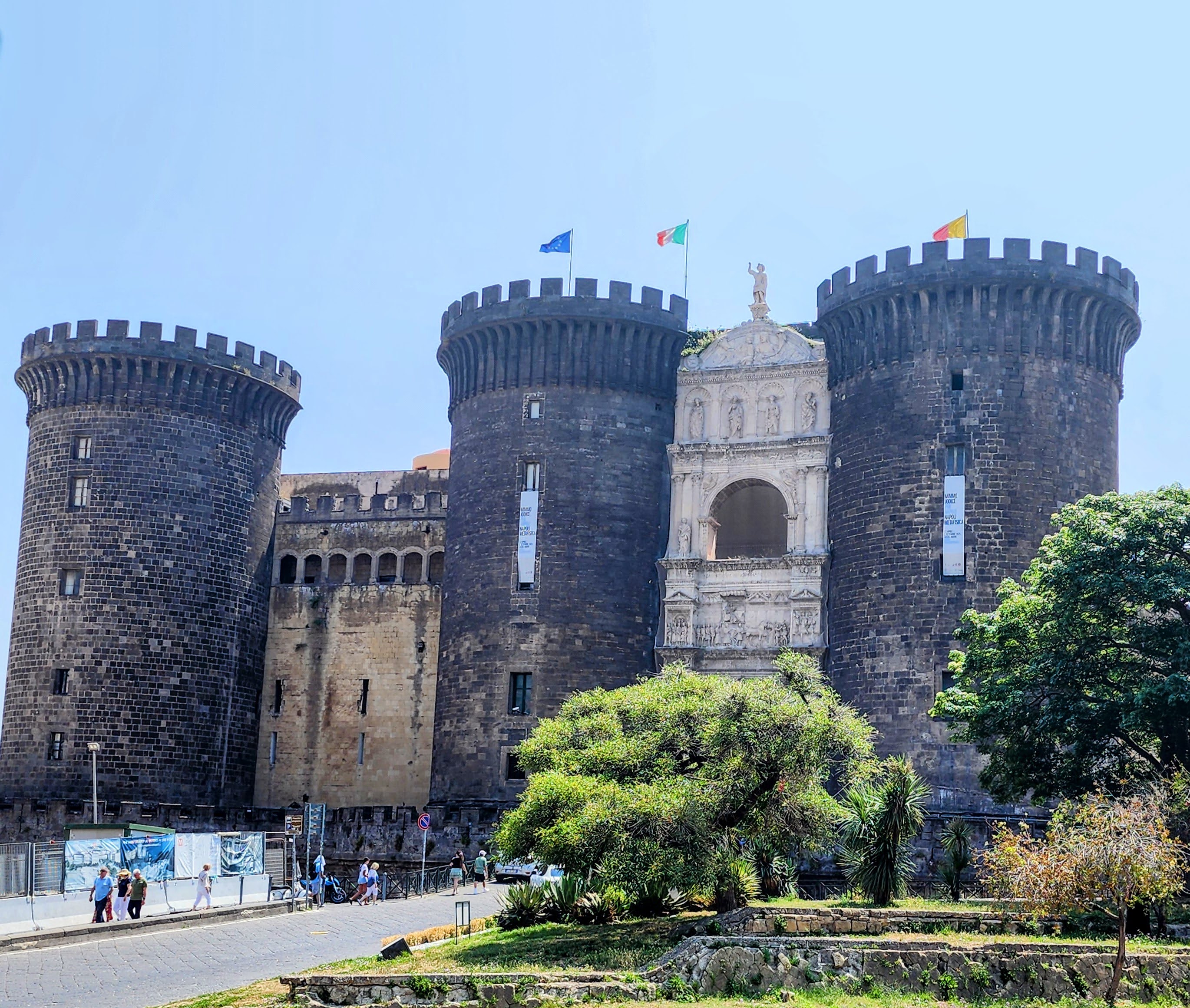
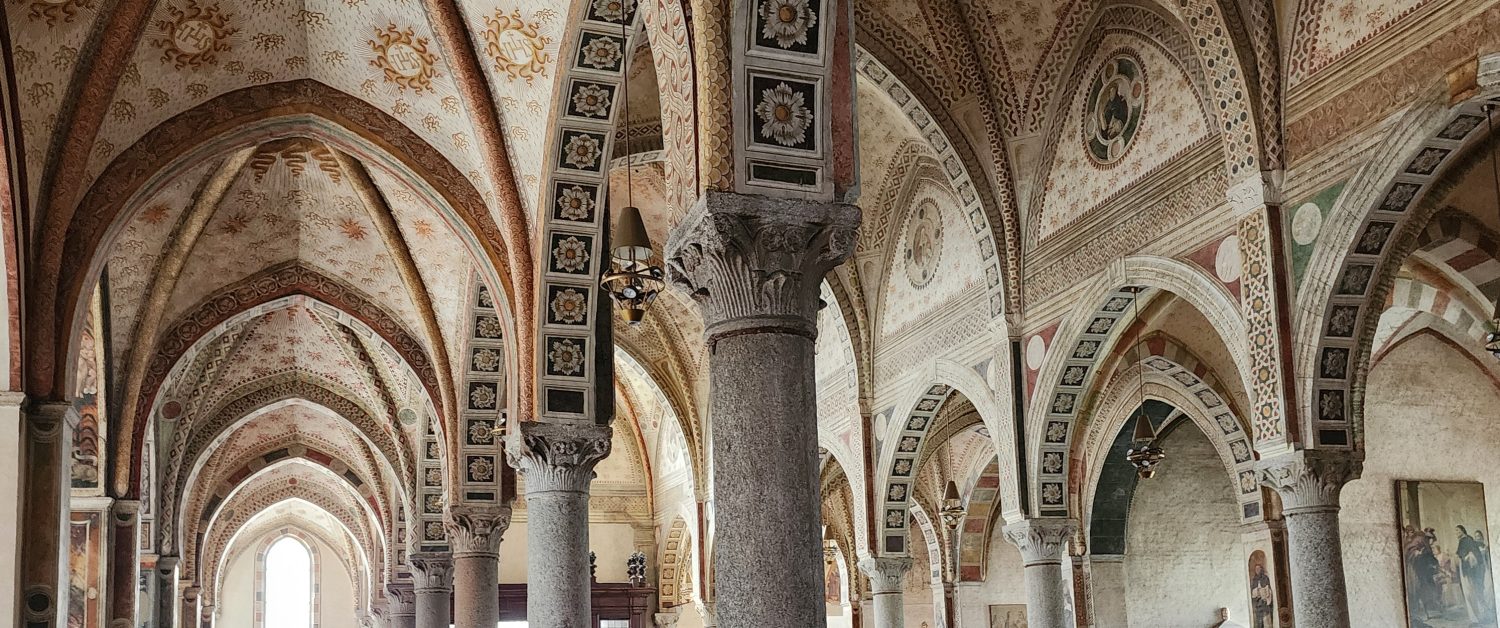
Castello dell’Ovo, Naples

The port, the castles, the zillion churches, and beeping herds of motor scooters are zooming by us on all sides and I think, “What a shame Pio didn’t get to bring me to Naples.  He would have loved that.”  Then a little giggle bubbles up inside me as I realize OF COURSE Pio brought me to Naples.  Why else would I be on this bus with Rosa, listening to the Italian guide channel, humming along to the songs?  How else could this have happened?   And I feel quite delighted.

It’s cheaper when only one of you has to buy a plane ticket, a bus ticket, and pizza.  It’s easier when only one of you has to figure out how to be gone from work.  One of us is more of a particle (that would be me) and one of us is more of a wave, now.  One of us is denser and the other lighter. 

It’s easier, in ancient cities, to feel less bound to things like time.  It’s easier, after you live through a death, to feel less bound to things like density.  I love to consider the fact that everything is mostly made up of nothing, anyway.  That atoms are mostly “empty” space, so that what “is” and what “isn’t” are more the same than different.  When I say I “love to consider” that, I mean it literally.  I love to sit with it and try to feel it, try to imagine it.  Tangible, imaginary, present, past, future…are all made up almost entirely of the same material.  The difference is negligible.

All of that is very lovely.  But in the evening Rosa turns the tv on and all of the sudden the world is full of war and inconceivable suffering.  Which doesn’t feel at all like the peaceful nothing of empty space where time is a big pond you can swim in.  How can all of this be possible, simultaneous?

I don’t know. One minute I’m on a tour bus humming along to “O Sole Mio” and the next minute I am aware of the apocalypse that is also happening. 

We had a fantastic view of Vesuvius from the second story of the bus.  How in the name of common sense can so many people be living so close to this enormous volcano?  All of us know what volcanoes are capable of and all of us know that Vesuvius is not to be trusted.  Even though lava and crumbling buildings are mostly made of nothing, I wouldn’t like to be beneath either one of them. 

Ironies are everywhere.

On the subject of war and exploding volcanos, I don’t think it’s actual death that I am afraid of.  I’m already mostly made of nothing.  I’m afraid of suffering.  Of pain.  That small percentage of particle that is physical and can feel sensations changes everything.  At all cost, I don’t want it to be cut, burned, crushed.

Let’s not talk about that anymore.  Let’s get back on the bus.  Let’s not look at Vesuvius.  Let’s admire the Castello dell’Ovo.  How it sits between the land and the sea for 2000 years.  Let’s think about how 8 years can go by after your husband dies and how both of your spirits go through a transition.  And then both of you are ok.  Different, but quite alright.  And the castle is full of tourists, not knights in armor, and the ocean still laps at its feet.

Rosa and I get off the bus and are walking back to the hotel, trying not to get run over by motor scooters.  Her husband has only been dead for 4 years and she still fights it.  The suffering makes her denser, it seems to me, and further from the lightness that is everything.   Our lives have been so different that we are an inconceivable pair. 

I’d like to sit at a table by the street after getting off the bus and have a cold drink—a Spritz, to be exact. I would ponder the castle and pray to Vesuvius to be nice.  But Rosa wants to go to the hotel room to lie down.  I wouldn’t mind sitting at a table “alone,” but I decide to go with her.  The dead brothers would appreciate that.  I can have a Spritz another day.  Besides, I have writing to do.

A Poem For The Kiss / Un Poema Para El Beso / Un Poesia Per Il Bacio


there must be a poem
for the kiss
a quiet poem
a gentle kiss
the one you don’t remember

she presses her lips to
your warm forehead
a terrible journey
is over and
silence begins
now

another poem might say
you seem to be
only asleep, but
not this one
this poem has
watched you through
a thousand sleeps and
knows the difference

her lips press your forehead
this last time
trembling

the doctors have
turned off the morphine and
you are free of
this destroyed flesh

they will bring her
your ring, later
to keep
in the poem
with the kiss


Un Poema Para El Beso

debe haber un poema
para el beso
un poema silencioso
un beso suave
el que tu no recuerdas

ella aprieta sus labios a
tu frente cálida
un viaje terrible
se ha terminado y
el silencio comienza
ahora

otro poema podría decir que
pareces estar
solo dormido, pero
este no
este poema te ha vigilado
mil veces
mientras duermes y
conoce la diferencia

los labios de ella tocan tu frente
esta última vez
temblando
los doctores han
apagado la morfina y
estás libre de
esta carne destruida

luego, ellos le llevarán
tu anillo
a ella
para guardar
en el poema
con el beso


Una Poesia Per Il Bacio

ci dovrebbe essere una poesia
per il bacio
una poesia a sottovoce
un bacio delicato
l’unico che non ricordi

lei preme le sue labbra
sulla tua fronte calda,
un viaggio terribile
è finito e
il silenzio inizia
ora

un’altra poesia direbbe
che sembri
solo addormentato
ma non questa
questa poesia ti ha
guardato mentre dormivi
mille volte e
sa la differenza

le sue labbra ti toccano la fronte
l’ultima volta
tremando
i dottori ti hanno tolto
la morfina e
tu sei libero da
questa carne distrutta

le porteranno
il tuo anello più tardi
per conservarlo
nella poesia
con il bacio

More of a Hum, Less of a Scream

HABLANDO SOLA

I’ve been thinking about something. I’ve been thinking about it while I surf, while I ride my bike, in the early mornings when I’m neither awake nor asleep.


JUNE

It’s June. I don’t know what that means to you, but it for me it dislodges something that lives deep in my bone marrow. It brings me flashes of unthinkable doctor visits, sudden plane tickets, a long morning run when I understood exactly what was happening even though I didn’t dare to say it, and the surreal sensation of packing suitcases for a trip that wasn’t a vacation.  A lot of those days turned into poems.

Probably, eventually, if I live long enough, June will just be June.  It will be different. Everything is always different, eventually. You can quote me on that if you want to. You can bet your life savings on it.

After June comes July. July reminds me of long walks, fruit and vegetable markets, chemotherapy appointments, and the ER. August follows, with more of the same. September is a hard month that takes me on a trip through the process of dying. Getting out of your body is as messy as getting into it.  And then there’s October with its interminable silence. Clocks tick 24 hours a day. The sunlight is sharp and cold.


THAT WAS 3 YEARS AGO

You wonder how many more times I’m going to tell you this story? I don’t know. Imagine how many times it tells itself to me. 

It’s a good story.  If today was the end of it, you could say it has a happy ending.  How’s that for optimism?


CELLS

I read once that every 7 years every cell in the human body is replaced by a new cell. Have I written about this before? I might have. I think it’s important.

I’m writing about it now, because I’ve been thinking about my body. Almost half of my body wasn’t even there, three years ago, when Pio and I took off for Milan. These hands are only sort of the hands that packed the suitcases. The feet that walked through pairs of shoes on the streets of Milan trying to make space for all this—those feet are only sort of my actual feet, today. Half the cells in my body—from my ankle bones to the synapses in my brain—never even knew Pio. Half of these eyes never saw him. Isn’t that crazy?

And this: half the cells that make up my brain where the stories are held aren’t even the original ones who recorded the stories. They do the job of remembering the stories they’re told, I guess, but they weren’t even there in my head on the airplane, or at the market trying to remember how to say “cauliflower” in Italian, or in front of the TV together splitting a beer and potato chips (because at that point, why not?), or in the hospital room holding hands when that was all that was left. Imagine. A few years more and not even one cell in my body will have been there.

We remember things experienced in other bodies.


HARD POETRY

I think that explains everything. It explains how we can go on living. Because with every hour and every day, our bodies turn into other bodies that haven’t even experienced our own stories. Our brain cells that remember them were told the stories by previous generations of brain cells. It’s more hard poetry than hard science, but what a perfect place for them to meet. The stories remain, but something about the sound they make is different. Something about the tone. The sound coming from my bones is there, but it’s more of a hum, less of a scream.

You can’t stop it. You can’t make it hurry up. If you just keep eating some food, drinking some water, sleeping at night, and staying out of the jaws of crocodiles, it happens on its own. It’s beautiful. It’s brutal. It doesn’t really matter what you call it.


EVENTUALLY

Do I sit around ruminating on this all the time?  I do not.  But it’s June.  Part of me commences a 4-month walk through The Valley of The Shadow of Death.

It’s alright. I fear no evil. 

Everything, eventually, is different.

Afterlife

the world has ended
this is the afterlife

birds here
and  people
speak so many languages

the silence that
sits above
this thin layer of air
is infinite and
louder than wind

i expected angels
in the afterlife
cherubim
saraphim
or, if i’ve been wrong
lakes of fire

but no

the winged things here are
dragonflies
hummingbirds
parakeets
moths

and lakes lie like
broken pieces of sky

The Universe of This Is Not What I Signed Up For

I would like to say something meaningful at a time like this, with our world locked down and life suspended, but those are tall orders. What is meaningful? I could describe my daily experience to you, the peacefulness of my days and my nights. I am among the lucky ones, at this moment. I know that. Luck can change on a dime—I know that, too.

I am in familiar territory. I am the mapmaker of this place we are. I was exploring its contours before you all arrived.

There are ways in which what has happened in the rest of the world has thrown it, en mass, into my reality–the reality of grief. Not in every way, but in some ways. Now you have all had the rug yanked out from under you. Now your world has been shaken to pieces, too. Now you are discovering what I meant two years ago when I wrote about sitting and listening to silence, trying to take it all in. When I wrote about the vertigo of having no solid reference points. The waiting.

Welcome to the planet called Loss. Welcome to the solar system called I Did Everything Right But Everything Still Turned Out Wrong. Welcome to the galaxy called All You Can Do Is Wait. It’s in the universe of This Is Not What I Signed Up For. The tour will begin in 10 minutes.

What are we waiting for? We don’t know. Whatever comes next.
When will it get here? Someday. Some other day that is not today.
Are we going to like it? Maybe. Maybe not.
Do we get our old life back? I won’t. We’ll find out if you do.

Life, again, has proved right this belief of mine that no matter what it is that you think is going to happen, the thing that actually happens will be something else. Expect the best. Prepare for the worst. Realize that what comes will not be what you expected or prepared for. Breathe. Wait. Learn to walk barefoot over rocks, bake bread, and sleep with the windows open. You wouldn’t believe how useful these things can be.

Meaningful? Perhaps not.

But, true.

On this planet, The Past and The Future are separate islands in a sea so vast you cannot see one from the other.

Lettuce Soup

I don’t know. Whatever the question is, that’s my answer. At least I’m honest. 

The things I do know aren’t the answers to anything in particular.

The Tower of Babel

I think of the Tower of Babel. (If you missed Sunday School that Sunday, click here.) Before we all went into lock-down, we as a human species were one thing, invincible. Now we’re all in our corners–sent to our rooms, so to speak. This is different than the Tower of Babel story, because in the Bible story their languages were scrambled so they couldn’t talk to each other. We can still talk to each other. We talk too much, repeating things we heard someone else say, getting into heated disagreements in/over little black letters on a screen. The divisions are in place. It’s Babel. Different, but the same.

“They” closed the borders of the countries of the world. I live in a town that functions 100% on tourism. We don’t have any other industry. We don’t have any other way of earning our daily bread. We (not me personally at this time, but the citizens of the place I live) are hungry.

The streets are quiet. I remember 25 years ago when this quiet was normal. It was The Thing, not the absence of a thing. But it was different, then. There were more trees and fewer empty buildings. I love the quiet. I love the stillness. Finally something that is true is revealed from beneath something that was artificial. Does that make sense? To me, it does.

We fear crime. Stores, closed until further notice, have been emptied by their owners. Naked mannequins stand in shop windows. Restaurants are dark as caves, emptied of tables and chairs. Where has all the furniture gone?

I forgot there were this many monkeys. The hillsides are full of their voices just before dawn. They are everywhere. I thought they were gone–a thinning, endangered population that human activity was slowly extinguishing. Not even. There is nothing wrong with the monkeys. They just didn’t like us is all. Sometimes I’m not sure I like us.

Parrots. Have you ever listened to them? On a morning with no buses, no construction noise, no music from restaurants trying to attract foot traffic. I sometimes laugh at their jokes even though I don’t understand the words.

The ocean. It doesn’t need us. We sigh and suffer for it. We need it on our skin. We dream of it at night. And there it is, luminous, rising, falling, breathing its salty warm breath into the world, cleaner and more crystalline than ever. It isn’t one bit sad.

“When Things Get Back to Normal”

Nothing is ever going to be the same after this. I don’t think “things” are going to go back to being “like they were.” I could be wrong–let’s just take that as a given no matter what I say. We talk about, “after this is over,” and of course it will be over. Everything ends. But maybe we should drop the phrase “when things get back to normal.” Am I the only one who foresees a new normal?

I might know something about new normals.

Having the world implode into lockdown and watching society melt isn’t entirely dissimilar to the experience of having my husband become sick and die. It isn’t the same, but one is reminiscent of the other. Both things happened suddenly. Both things yank the rug out from under you. Both things cause you to have to rethink ABSOLUTELY EVERYTHING about your life. Both things destroy what was and leave you with god-only-knows-what afterward. Both things are surrounded by a lot of silence. Both of them involve waking up each morning and having to remember how “now” is different from “then” before you know how to live.

Remember how I confessed to walking and running on the beach with my eyes closed, trying to see with my skin and my ears? Now I can do it on my bike in the street. In little spurts, early or late. More than ever, being able to sense what is around me without being able to see it feels like a critical skill.

Lettuce Soup

What’s around me/us that I cannot see?

I’m told there’s a virus–literally “your death of a cold.” I can’t see it. Should I be afraid of the air?

There is hunger around me. I can feel that. In the empty streets, I see friends who wave and smile. I also see strange people that I never seen before–people who eye me in a way I don’t like. In a house a few miles from here a few nights ago 4 people were shot. It sounds drug-related–somebody owed the wrong person too much money or something. I’m not afraid of being shot in the night. I’m not afraid of being hungry. I was also not afraid the government would shut the borders and that the restaurant owners would find it prudent to take home the tables and chairs. But they have.

Some people–people I know–are looking at the worst days of their lives. I am not. Not yet. Things have to be much different than this before they compare to the worst day of my life. I’ve been poor before. I’ve been hungry. I don’t talk about it much. Once, I made lettuce soup for my stepdaughter and pretended it was delicious (it wasn’t bad, really) because it was the only thing we had. I am a long long way from preparing lettuce soup for a hungry child who depends on me.

Something is Happening

Where am I? What is going on?

I love the silence. No cars. No buses. No dump trucks. No cement mixers. No music from bars. Nothing. I might be obsessed with it. I feel a sort of jealousy regarding it–it is mine and you cannot have it. I don’t want anyone or anything to touch it. A noisy motorcycle drove by this morning and I held my breath. It interrupted the locusts and the wind I was listening to. For a moment it drowned out the sound of the sea and it was like not knowing where I was.

I don’t want things to go back to the way they were. I loved things the way they were. I was happy, then. But something has happened. Something is happening. Do you feel it? Things can be different. Better. Can’t they? If there is more than one way to be, can we be another way now that we’ve had this pause. Like children redirected after a time out?

Listen…  

Is that the sound of the meek inheriting the earth?

Tiger / Christmas Eve

there’s no escaping
Christmas Eve

it follows on the heels of
innocuous events like
autumn equinox
Halloween

you can hide
under the bed,
swim through crocodiles
across the estuary,
climb a tree and
not come down

but Christmas Eve can
hear you breathing
it will trail you
like a tiger

it will catch you
in its claws

A Poem to Name a Book After

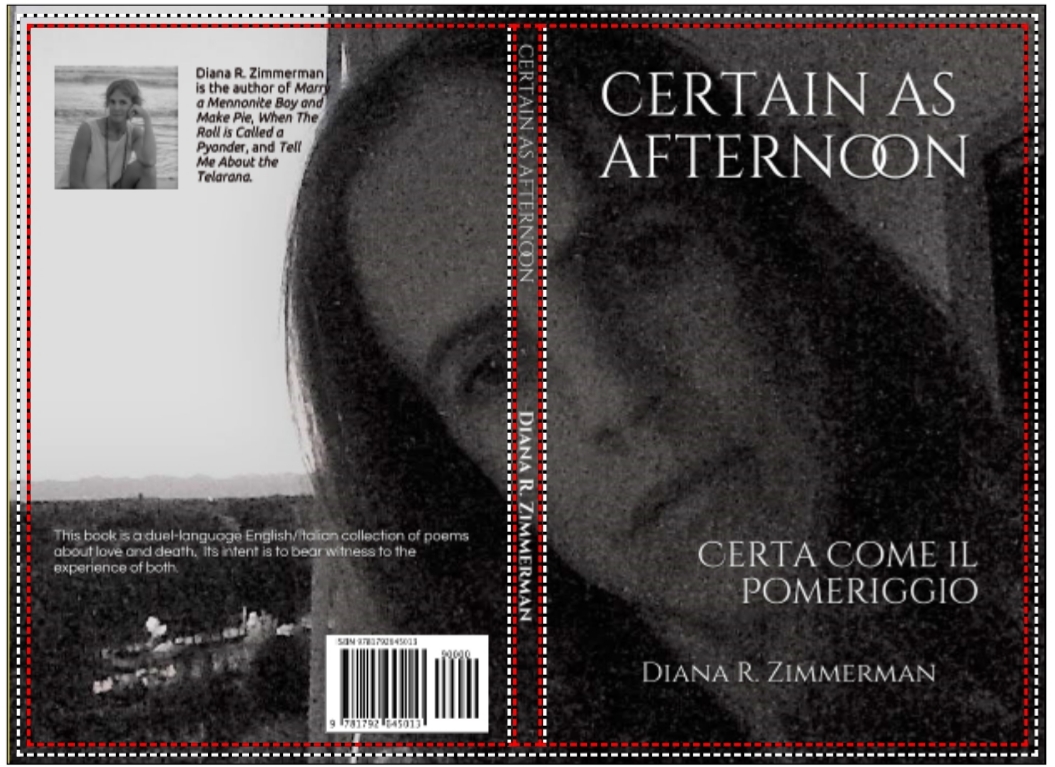
That’s what I think of the poem “Certain as Afternoon,” the title poem of my new book.

The poem is about the beginning of the end–about death, but not about the moment of dying. The poem is about the moment death is born and no one knows it. Like quiet rain in the night, and you wake up and look out the window and say, “Hey look! It rained in the night. I wonder when? I didn’t hear anything.”

In the poem, there is a “we.” The “we” is me and Pio, of coruse, but it is also any other “we” in the world. In the night while we are sleeping in our room, something else enters the room quietly like rain in the night. No one knows the moment it comes. But when we awaken in the morning it is there in the room with us, certain as afternoon.

Because the one thing you can be sure of in the morning, on any morning, is that the next thing to arrive is afternoon.  And when the end has begun, it’s arrival follows as naturally as afternoon follows morning.


Certain as Afternoon

death came quietly
like rain in the night
no one knew the
moment it began

there was no thunder
no lightening
when the sick cells
began to divide then
send out seeds

when we woke in the
morning
it stood in the
room with us
certain as afternoon


Certa Come il Pomeriggio 

la morte cominciò a formarsi
silenziosamente
come pioggia nella notte
nessuno sapeva il momento
del suo inizio

non c‘erano tuoni
nè lampi
quando le cellule malate
cominciarono a separarsi
ed a disseminarsi 

quando ci siamo svegliati
al mattino
era lì in piedi
nella stanza con noi
certa come il pomeriggio

Available Now: CERTAIN AS AFTERNOON / CERTA COME IL POMERIGGIO

My new poetry collection, Certain as Afternoon, is now availble on Amazon.com, Amazon.it, Amazon.es, Amazon.whatever.

Mia nuova raccolta di poesie, Certa Come il Pomeriggio. è ora disponibile per ordinare su Amazon.com, Amazon.it, Amazon.es, Amazon.tutto.

I love this book. I love the terrible story it tells because it’s my story, our story. When stories are all you have, you’d be amazed how much you can love them. A lot. They don’t have to be pretty. Certain as Afternoon covers about a year and a half, calendar time. Which equal about 7 eternities in real life. I didn’t write the poems as the things happened; I wrote them later. A thing has to get done happening before you know what it was. All you can do while it’s happening is hold on for the ride.

Adoro questo libro. Adoro la storia terribile che racconta perché è la mia storia, la nostra storia. Quando le storie sono tutto ciò che hai, è incredibile quanto puoi amarle. Tantissimo. Non importa che non siano belli. Certa Come il Pomeriggio racconta la storia di circa un anno e mezzo, tempo di calendario. Equivalente a 7 eternità nella vita reale. Le poesie non le ho scritte quando accadevono le cose; le ho scritte più tardi. Una cosa deve finire di succedere prima che tu sappia cosa fosse. Tutto quello che puoi fare mentre sta succedendo è rimanere aggrappata.

If you helped me translate this book, please don’t order it—I will get one to you.

Se tu mi hai aiutato a tradurrre questo libro, per favore non ordinarlo—ti lo regalerò io. Se tu sei nella famiglia di Pio, non comprarlo. Ti lo vorrei regalare.

This is how we begin:

Si comincia così: 

New Poetry Book Next Monday / Nuovo Libro di Poesie Lundì Prossimo

Certain as Afternoon / Certo Come il Pomeriggio is ready for you. Next Monday, one week from today, I will post a live link to it on Amazon.com, and you will be able to order it. The price is $10. It will also be available on Amazon.it (if I understand correctly) for anyone in Italy who wants to purchase it. I have not made it an ebook at this time because, honestly, I don’t like ebooks. This book, especially, wants an actual physical body.

Certain as Afternoon / Certo Come il Pomeriggio è pronto per voi.  Lunedì prossimo, a una settimana da oggi, vi darò un link per farvelo trovare su Amazon.com.  Il costo è $10. Sarà anche disponibile su Amazon.it (se ho capito bene) per chiunque vorrà acquistarlo in Italia.  In questo momento non l’ho creato come ebook perché, onestamente, gli ebook non mi piacciono. Questo libro, in particolare, vuole avere un corpo fisico.

Cover design in progress


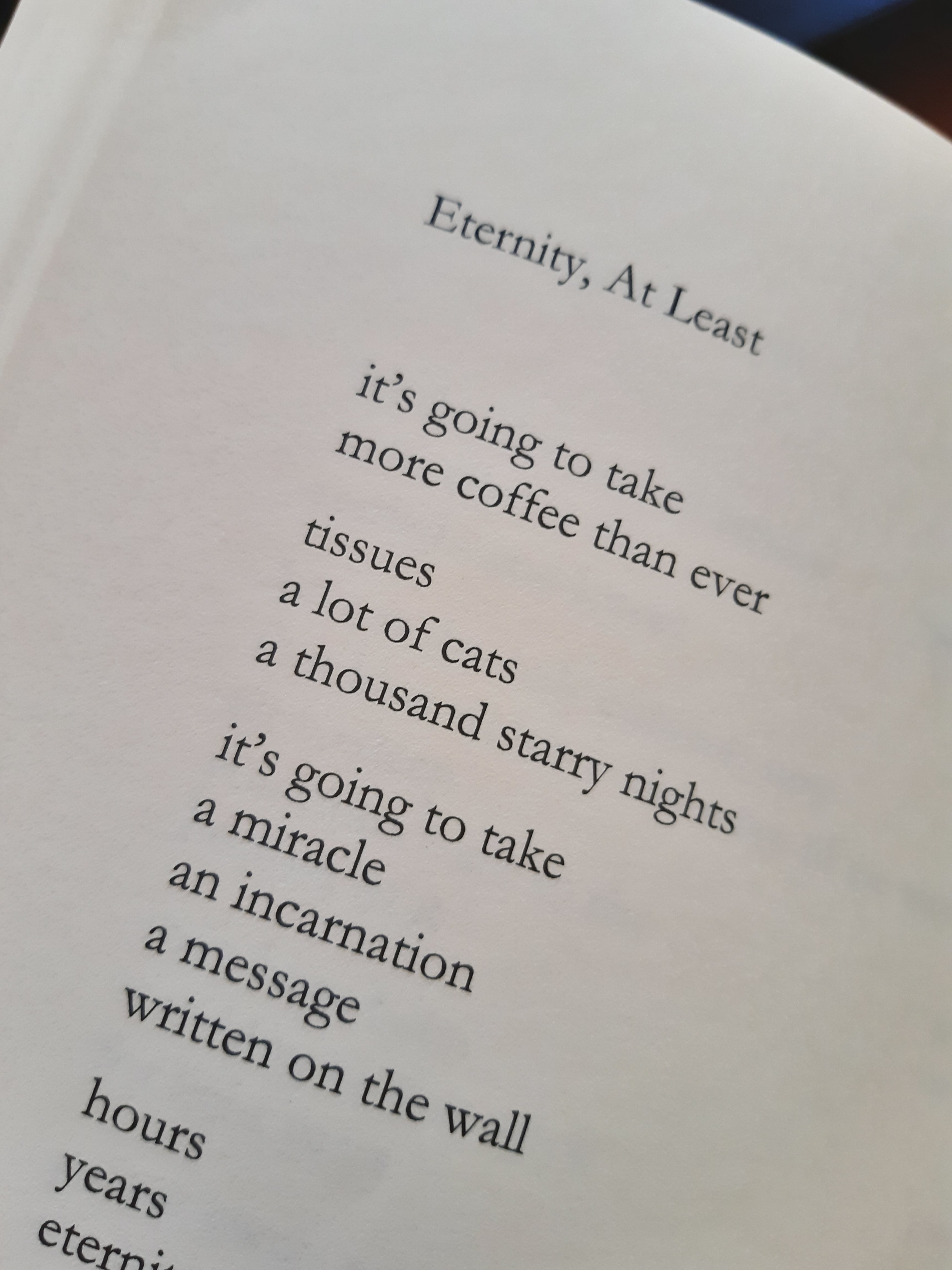
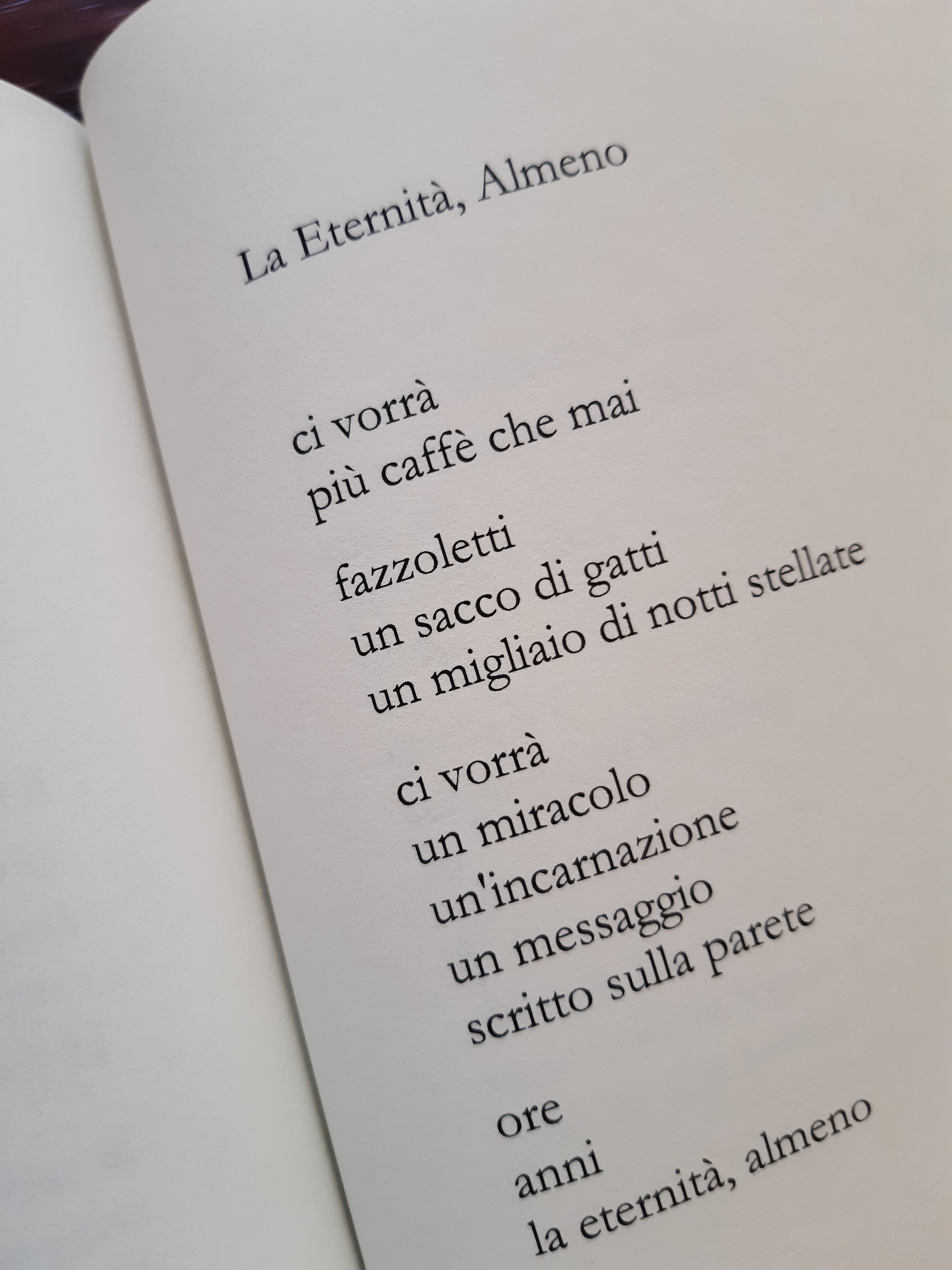
Eternity, At Least / La Eternità, Almeno

The Dying Man Refuses Clothes / L’uomo In Fin Di Vita Rifiuta i Vestiti

A poem from Certain asAfternoon/Certa Come il Pomeriggio. First in English, following in Italian.  The sample copy of the book is here and is being edited now.  Watch for a live link this month.

The Dying Man Refuses Clothes

in this poem
the dying man
refuses clothes

we try to cover him
with a towel
a cloth

he pushes it
away
he wants
nothing

he is not ashamed
of dying
or being naked

the sisters-in-law
in the poem
turn away

the doctor comes
into the poem
to reason with him

the dying man
asks for
lemon ice cream
smiles with his
teeth and
deep dark eyes


L’uomo In Fin Di Vita Rifiuta i Vestiti

in questa poesia
l’uomo in fin di vita
rifiuta i vestiti

cerchiamo di coprirlo
primo con un asciugamano
poi con un lenzuolo

lui lo respinge
non vuole
niente

non si vergogna
né di morire
né di essere nudo

le cognate
nella poesia
voltano le loro facce

arriva il dottore
nella poesia per
ragionare con lui

l’uomo in fin di vita
chiede
gelato al limone
sorride con i suoi
denti e i suoi
occhi scuri profondi


Certain as Afternoon / Certa Come il Pomeriggio
coming without a doubt
in arrivo senza dubbio

Whole Fennel/Finocchio Intero

This poem, from Certain as Afternoon, is a the story of a day.   I talk to myself in this poem, explaining to myself what happens on the day Pio is in the hospital for tests, and he calls me to tell me the bad news I have already intuited. Why must I tell myself about it? Because you have to explain things to yourself over and over as you try to understand, open, make room for everything.

In Certain as Afternoon, the voice in the poems moves around.  It switches between pages from first person to second and to third.  The voice speaks to me.  It speaks to you.  It speaks to the one who is dying.  Sometimes the voice speaks to the poem.  Sometimes the voice becomes the poem.  It sounds complicated, but really it isn’t.

First in English, dopo in Italiano.


Whole Fennel

when he calls you
on the phone
from the Policlinico to
tell you he is
dying, you say
alright
and
i’ll be there soon

then you go to the
park and walk,
order the trees
not to let you
cry. you don’t want
him to see you with
red eyes and
puffy lids

you stop at the
mercato for his favorites
prosciutto crudo and
whole fennel

it isn’t going to be today,
anyway

at the hospital you will
sit together at a
table in the sun
eat sandwiches

share fennel and
both wonder
if it is true


Finocchio Intero

quando lui ti chiama
al telefono
dal Policlinico per
dirti che sta
morendo, tu dici
va bene
e
arrivo subito

poi vai al
parco e cammini,
preghi agli alberi
di non farti
piangere. non vuoi che
lui ti veda con gli
occhi rossi e
gonfi

ti fermi al mercato a prendere
i suoi spuntini preferiti
prosciutto crudo e
finocchio intero

comunque
non sarà oggi

all’ospedale vi
siederete insieme ad un
tavolo al sole
mangerete dei panini

condividirete il finocchio e
vi chiederete
tutti e due
se è vero