Ghosts Are More Territorial Than Cats

ghosts are more territorial than cats
I knew you wouldn’t
follow me
you prefer those same empty rooms with
mapaches
scratching at the screens

I felt you watch me pack the dishes
take down the pictures
put my cloths into suitcases
and take apart the bed
I assembled there
two and a half years ago when
you were a flesh and blood human
I didn’t know

de último
I stuffed the cats into cages and
took them away
yowling

they’re getting used to it here
already
they love me more than
my own ghost

ghosts are more territorial than cats
which is lucky
I could walk away and leave you there
you would never have left yourself
in spirit
the way you left in body
one cool dry dawn
sin mirar atrás

it was easier for me to go
the excuse about the inundaciones
is true and everyone knows it

I didn’t say adiós when I left
or hasta luego
either
I walked out the door
as silent as you
as silent as cats

I am not territorial
at all

I bolted the bed together in the new room
with no ghosts
put my shoes in the closet and
the spoons in the drawer
I’m home now
with my books and my
masa madre fermenting in the fridge

at night under the fan
I open the windows to the
sea breeze
and dream sweetly
of cats

Conozco Islas

vámonos de aquí
dejemos atrás la tierra firme
echémonos al mar
nuestra cuna, casa, ataúd
y avancemos hacia el horizonte
con brazadas fuertes

no temamos baby
al sol, a la luna
a los espacios líquidos
desconocidos

vámonos de aquí
te ruego
conozco islas
que desde aquí no se ven
conozco los dragones
a la orilla del mundo

no despidámonos más
excepto de la tierra
donde nos raspa el aire y
nos atrapa la gravedad

A Poem For The Kiss / Un Poema Para El Beso / Un Poesia Per Il Bacio


there must be a poem
for the kiss
a quiet poem
a gentle kiss
the one you don’t remember

she presses her lips to
your warm forehead
a terrible journey
is over and
silence begins
now

another poem might say
you seem to be
only asleep, but
not this one
this poem has
watched you through
a thousand sleeps and
knows the difference

her lips press your forehead
this last time
trembling

the doctors have
turned off the morphine and
you are free of
this destroyed flesh

they will bring her
your ring, later
to keep
in the poem
with the kiss


Un Poema Para El Beso

debe haber un poema
para el beso
un poema silencioso
un beso suave
el que tu no recuerdas

ella aprieta sus labios a
tu frente cálida
un viaje terrible
se ha terminado y
el silencio comienza
ahora

otro poema podría decir que
pareces estar
solo dormido, pero
este no
este poema te ha vigilado
mil veces
mientras duermes y
conoce la diferencia

los labios de ella tocan tu frente
esta última vez
temblando
los doctores han
apagado la morfina y
estás libre de
esta carne destruida

luego, ellos le llevarán
tu anillo
a ella
para guardar
en el poema
con el beso


Una Poesia Per Il Bacio

ci dovrebbe essere una poesia
per il bacio
una poesia a sottovoce
un bacio delicato
l’unico che non ricordi

lei preme le sue labbra
sulla tua fronte calda,
un viaggio terribile
è finito e
il silenzio inizia
ora

un’altra poesia direbbe
che sembri
solo addormentato
ma non questa
questa poesia ti ha
guardato mentre dormivi
mille volte e
sa la differenza

le sue labbra ti toccano la fronte
l’ultima volta
tremando
i dottori ti hanno tolto
la morfina e
tu sei libero da
questa carne distrutta

le porteranno
il tuo anello più tardi
per conservarlo
nella poesia
con il bacio

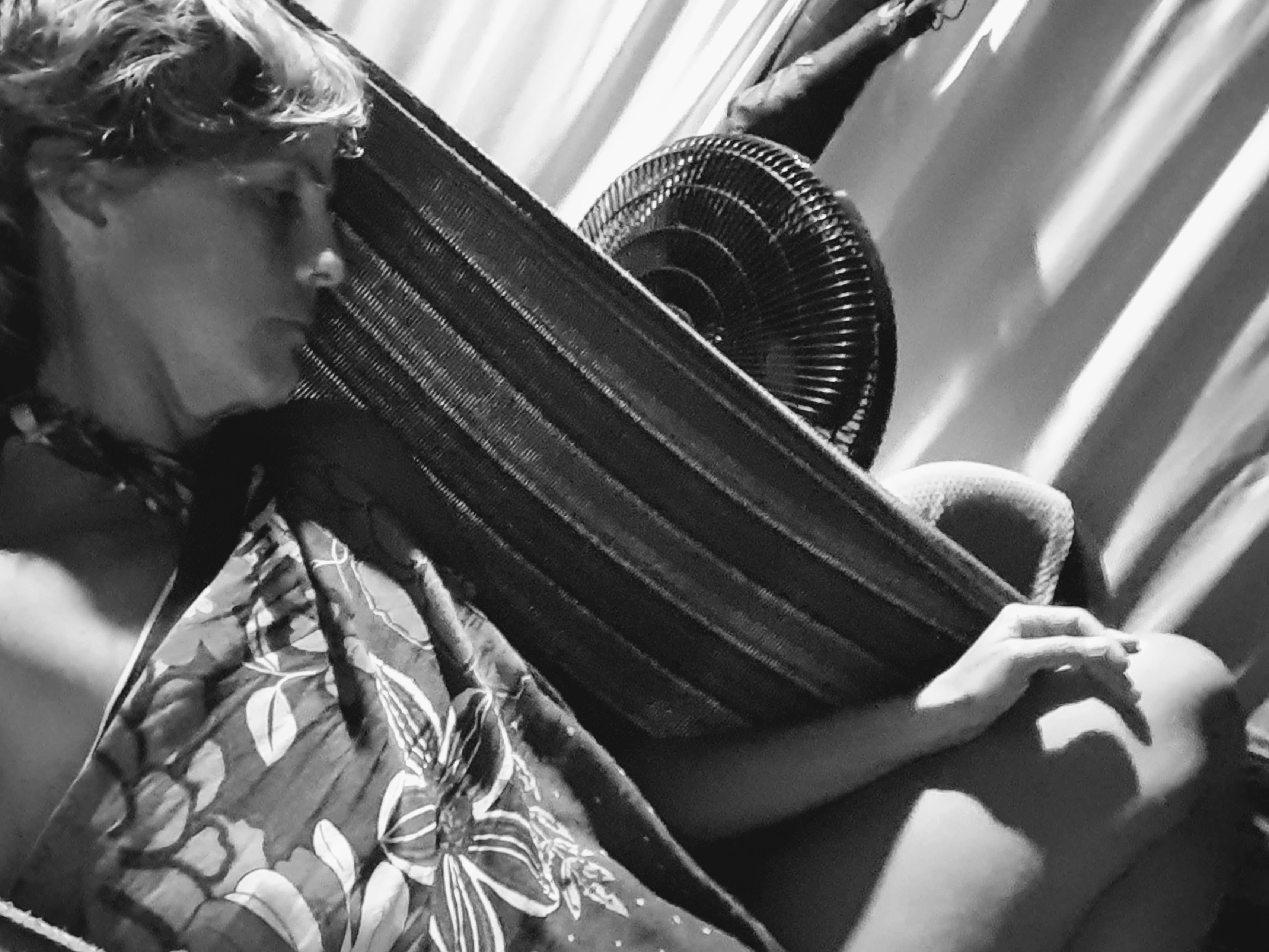
I’m Lying in my Hammock When I Hear the Phone

(poem #2 in a series in progress)

I’m lying in my hammock when
I hear the phone
make a cricket sound

it’s you
you found me
you want to be my friend

I’m lying in my hammock when
I hear the phone
make a cricket sound

it’s you
saying hola
and I answer
because I always do
because your hair is curly and
your eyes are blue and
I am lying in my hammock
with the cats

you tell me things that
are the answers to
questions I haven’t asked

I’m lying in my hammock when
I hear the phone
make a cricket sound

it’s you
you ask me questions that
have long answers so I
summarize

you say you like me
I tell you
you don’t know me
I say it because I’m scared
because I do know me, and
there are crickets in my phone
at night I dream of cats

you have only imagined me
you have no idea


Follow Me

follow me
to the brackish places
where warm muck mixes
with ocean salt and
last week’s rain
this is where land crabs
make their burrows
little fish hatch between
rotting twigs and
baby crocodiles wait,
their eyes floating like
bubbles at the surface,
for the return of their
hunting mothers


Sígueme

sígueme
a los lugares salobres
donde el lodo caliente se mezcla
con la sal del mar y 
lluvias de la semana pasada
aquí es donde los cangrejos
hacen sus hoyos
pecesitos nacen entre
ramas podridas y
cocodrilos infantes esperan,
sus ojos flotando como
burbujas en la superficie,
sus madres que andan
de caza

More of a Hum, Less of a Scream

HABLANDO SOLA

I’ve been thinking about something. I’ve been thinking about it while I surf, while I ride my bike, in the early mornings when I’m neither awake nor asleep.


JUNE

It’s June. I don’t know what that means to you, but it for me it dislodges something that lives deep in my bone marrow. It brings me flashes of unthinkable doctor visits, sudden plane tickets, a long morning run when I understood exactly what was happening even though I didn’t dare to say it, and the surreal sensation of packing suitcases for a trip that wasn’t a vacation.  A lot of those days turned into poems.

Probably, eventually, if I live long enough, June will just be June.  It will be different. Everything is always different, eventually. You can quote me on that if you want to. You can bet your life savings on it.

After June comes July. July reminds me of long walks, fruit and vegetable markets, chemotherapy appointments, and the ER. August follows, with more of the same. September is a hard month that takes me on a trip through the process of dying. Getting out of your body is as messy as getting into it.  And then there’s October with its interminable silence. Clocks tick 24 hours a day. The sunlight is sharp and cold.


THAT WAS 3 YEARS AGO

You wonder how many more times I’m going to tell you this story? I don’t know. Imagine how many times it tells itself to me. 

It’s a good story.  If today was the end of it, you could say it has a happy ending.  How’s that for optimism?


CELLS

I read once that every 7 years every cell in the human body is replaced by a new cell. Have I written about this before? I might have. I think it’s important.

I’m writing about it now, because I’ve been thinking about my body. Almost half of my body wasn’t even there, three years ago, when Pio and I took off for Milan. These hands are only sort of the hands that packed the suitcases. The feet that walked through pairs of shoes on the streets of Milan trying to make space for all this—those feet are only sort of my actual feet, today. Half the cells in my body—from my ankle bones to the synapses in my brain—never even knew Pio. Half of these eyes never saw him. Isn’t that crazy?

And this: half the cells that make up my brain where the stories are held aren’t even the original ones who recorded the stories. They do the job of remembering the stories they’re told, I guess, but they weren’t even there in my head on the airplane, or at the market trying to remember how to say “cauliflower” in Italian, or in front of the TV together splitting a beer and potato chips (because at that point, why not?), or in the hospital room holding hands when that was all that was left. Imagine. A few years more and not even one cell in my body will have been there.

We remember things experienced in other bodies.


HARD POETRY

I think that explains everything. It explains how we can go on living. Because with every hour and every day, our bodies turn into other bodies that haven’t even experienced our own stories. Our brain cells that remember them were told the stories by previous generations of brain cells. It’s more hard poetry than hard science, but what a perfect place for them to meet. The stories remain, but something about the sound they make is different. Something about the tone. The sound coming from my bones is there, but it’s more of a hum, less of a scream.

You can’t stop it. You can’t make it hurry up. If you just keep eating some food, drinking some water, sleeping at night, and staying out of the jaws of crocodiles, it happens on its own. It’s beautiful. It’s brutal. It doesn’t really matter what you call it.


EVENTUALLY

Do I sit around ruminating on this all the time?  I do not.  But it’s June.  Part of me commences a 4-month walk through The Valley of The Shadow of Death.

It’s alright. I fear no evil. 

Everything, eventually, is different.

L’accento L’avrò Per Vita: Poesie in Italiano da CERTA COME IL POMERIGGIO

Il sabato 9 novembre ho fatto una piccola presentazione del mio nuovo libro di poesia e ho letto 5 poesie primo in inglese, poi in italiano.  Il libro, CERTAIN AS AFTERNOON / CERTA COME IL POMERIGGIO e una raccolta di poesie sull’amore, la vita, e la morte.

Un mio amico ha fatto dei video della presentazione e oggi, qui, condivido con voi le 5 poesie lette in italiano. 

Non ridete. L’accento Americano l’avrò per vita.


1 di 5: Una poesia che descrive il mondo di “prima,” e finisce con un avvertimento

2 di 5: Sul momento in cui la malatia è scoperta

3 di 5: Una poesia che parla della morte e il primo momento (di momenti infiniti) di silenzio

4 di 5:  Contemplando cos’è che si deve fare quando hai gia fatto tutto quello che potevi fare

5 di 5: Una poesia riguardo i cenere, promesse, e il mare

Namaste


You Can Always Come for the Cookies / Videos from a Poetry Reading

On Saturday, November 9 at Tamarindo’s one and only bookstore, I held a small launch party for and reading of my new poetry collection, CERTAIN AS AFTERNOON. I think I had realistic expectations regarding how much of a crowd a poetry book about death might draw, so I was pleasantly surprised by how many people showed up. Thirty is the number I heard: old friends, new friends, strangers, other widows.  I sold all the books I have.

I made a lot of cookies and bought some wine for the occasion. Even if you don’t love poetry (not the biggest draw in a surf town), you can always come for the cookies. I’m good with that.

A dear friend of mine videoed my presentation in short segments, which, today I am sharing with you. Following, is the introduction to CERTAIN AS AFTERNOON, and each of the 5 poems in English.

A neighbor who is also a poet made this comment to me after reading CERTAIN AS AFTERNOON:

“You say it’s a book about death, but it isn’t. It’s a book about life. You use shades of black to show us all the other colors.”


INTRO 1: HOW THE BOOK CAME TO BE, AND HOW IT CAME TO BE IN TWO LANGUAGES

INTRO 2:  WHAT IS THE PURPOSE OF THIS BOOK?

POEM 1 OF 5: A poem that paints a picture of “before” and ends with a warning

POEM 2 OF 5: About discovering sickness

POEM 3 OF 5: A poem about death and the first (of an infinate number) moment of silence

POEM 4 OF 5: On what you must do after you’ve done everything

POEM 5 OF 5: Later, contemplating ashes, the ocean, the idea of going home

Namaste

CERTAIN AS AFTERNOONCERTA COME IL POMERIGGIO

A Heart the Size of Your Fist

Excerpt from Marry A Mennonite Boy and Make Pie
Workplay Publishing, 2018
pp. 174-175


I knew that letters were going to come but wasn’t prepared for what happened when I found one lying in my campus mail box. I flashed hot, then cold, then nauseous, and I had to go somewhere to read it—somewhere that is not home. No one must look at me.

Across campus on the other side of the railroad tracks that run behind the theatre, there is a tree I sometimes climbed. It’s a scruffy old pine with branches that are naked near the trunk—a hiding place I discovered last spring before I met Tom, when the guy I’d been in love with all year started going out with somebody who wasn’t me.

I rode my bike to my tree with the letter in my pocket and climbed up to the seat where I mourned that other heartbreak.

Don’t cry. Whatever you do, don’t cry.

I didn’t want to go home with red eyes and snot on my shirt.

Don’t cry.

The problem wasn’t my housemates. It was Tom I was hiding from. Obviously, at our house you could cry if you wanted and you didn’t owe anybody an explanation. But Tom would expect one. One I didn’t have. When he said he loved me, I said it back. And I meant it. I did.


I didn’t cry.

I read the letter, and read the letter, and read the letter. I held it to my face. I pressed it to my arms, to my cheek, to my heart. All I could do was think about breathing. All he asked was for me to come back, but I couldn’t move from that tree.


Can you love two people? If you love two people, is one fake and one real? Which one? Or are they both lies?

Can you fracture into a thousand pieces on the inside, and outside no one will know? Can you die and still appear alive? Can you live without understanding anything?

What is happening to me? Why can I not let go? Why does it matter more than air? How will I live my life?

Can you ever be alright again, ever, after you are absolutely broken? How can so much pain fit into a heart the size of your fist?


It was like the day in Los Rios that I reached from the shower for my towel and was stung on my pinky finger by the scorpion hiding there. I stared in dumb disbelief at my hand, as a blinding pain surged through my tiny finger and exploded into the entire room. It charged the air around my body like electric and shook the walls of concrete. All the while, my smallest finger looked exactly the same.

Un Corazón del Tamaño del Puño

Extraco de Marry A Mennonite Boy and Make Pie
Workplay Publishing, 2018
pp. 174-175


Yo sabía que las cartas iban a llegar, pero no estaba preparada para lo que sucedió cuando encontré la primera en mi buzón en el campus universitario. Sentí calor, luego frío, luego náuseas, y tenía que ir a algún lugar para leerla, algún lugar que no fuera mi casa. Nadie debía mirarme.

Al otro lado de la universidad, al otro lado de las vías del ferrocarril que corren detrás del teatro, hay un árbol que yo a veces subía. Es un pino viejo desaliñado con ramas desnudas cerca del tronco, un escondite que descubrí la primavera pasada antes de conocer a Tom, cuando el muchacho del que yo estaba enamoradísima comenzó a salir con alguien que no era yo.

Me fui en la bicicleta hasta aquel árbol con la carta en el bolsillo, y subí al asiento donde lloré esa otra angustia.

No llorar, me dije. Pase lo que pase, no llorar.

Yo no quería ir a casa con los ojos rojos y mocos en la camisa.

No llorar.

El problema no eran mis compañeras de casa. Me estaba escondiendo de mi novio Tom. Obviamente en la casa donde vivía con las chicas, podrías llorar si querías sin deberle una explicación a nadie. Pero Tom me pediría una explicación. Uno que no tenía. Cuando Tom me decía que me amaba, se lo decía también yo. Y lo decía en serio. Era la verdad.


No lloré.

Leí la carta, y leí la carta, y leí la carta. Me la apreté a la cara. La presioné contra mis brazos, contra mi mejilla, contra mi corazón. Lo único que yo podía hacer era concentrarme en respirar. Lo único que pidió él que me había escrito la carta era de volver, pero no podía moverme del árbol.


¿Puedes amar a dos personas? Si amas a dos personas, ¿uno es falso y el otro es verdadero? ¿Cuál es cuál? ¿O son ambas mentiras?

¿Puedes fracturarte en mil pedazos por dentro sin que nadie lo nota por fuera? ¿Puedes morir y seguir vivo? ¿Puedes vivir sin entender nada?

¿Qué me está pasando? ¿Por qué no puedo dejarlo ir? ¿Por qué importa más que el aire? ¿Cómo viviré mi vida?

¿Es posible volver estar entero después de que estés completamente roto? ¿Cómo puede caber tanto dolor dentro de un corazón del tamaño del puño?


Era como el día en Los Ríos cuando, después de bañarme, tomé mi toalla y  un escorpión allí escondido me picó en el dedo meñique. Me quedé estupefacta mirando la mano, mientras un dolor cegador surgió a través de mi dedo meñique y explotó en toda la habitación. El dolor era tan grande que cargó el aire alrededor de mi cuerpo con electricidad y sacudió las paredes de concreto. Pero todo el tiempo, mi dedo meñique se veía exactamente igual.


A Poem to Name a Book After

That’s what I think of the poem “Certain as Afternoon,” the title poem of my new book.

The poem is about the beginning of the end–about death, but not about the moment of dying. The poem is about the moment death is born and no one knows it. Like quiet rain in the night, and you wake up and look out the window and say, “Hey look! It rained in the night. I wonder when? I didn’t hear anything.”

In the poem, there is a “we.” The “we” is me and Pio, of coruse, but it is also any other “we” in the world. In the night while we are sleeping in our room, something else enters the room quietly like rain in the night. No one knows the moment it comes. But when we awaken in the morning it is there in the room with us, certain as afternoon.

Because the one thing you can be sure of in the morning, on any morning, is that the next thing to arrive is afternoon.  And when the end has begun, it’s arrival follows as naturally as afternoon follows morning.


Certain as Afternoon

death came quietly
like rain in the night
no one knew the
moment it began

there was no thunder
no lightening
when the sick cells
began to divide then
send out seeds

when we woke in the
morning
it stood in the
room with us
certain as afternoon


Certa Come il Pomeriggio 

la morte cominciò a formarsi
silenziosamente
come pioggia nella notte
nessuno sapeva il momento
del suo inizio

non c‘erano tuoni
nè lampi
quando le cellule malate
cominciarono a separarsi
ed a disseminarsi 

quando ci siamo svegliati
al mattino
era lì in piedi
nella stanza con noi
certa come il pomeriggio